Views: 0 Author: Site Editor Publish Time: 2026-09-11 Origin: Site
Gear reducers serve as the critical heartbeat of industrial machinery, acting as the invisible driving force behind modern manufacturing processes. Whether they are powering multi-axis robotic arms or heavy-duty mining conveyors, these components remain absolutely essential for seamless automation. Ultimately, the reliability of a machine depends entirely on the mechanical integrity of its gearbox. A single failing transmission unit can abruptly halt an entire production line. This leads to catastrophic downtime and massive financial loss.
Consequently, plant managers and lead engineers face a critical dilemma when scaling operations. Upgrading legacy equipment presents identical procurement challenges. Should you partner with an Original Equipment Manufacturer to build a bespoke mechanical solution? Or does a private label strategy make more sense for a rapid, off-the-shelf deployment?
This comprehensive technical guide breaks down the critical differences, associated costs, and strategic trade-offs of each manufacturing model. By analyzing the pros and cons of both avenues, we aim to help procurement teams choose the right reducer manufacturer safely and effectively. Making an informed choice at the design stage ensures long-term operational success and protects your bottom line.
Key Takeaways
OEM manufacturing offers ultimate control over mechanical design, making it the ideal route for protecting intellectual property and solving complex automation needs.
Private labeling provides a significant time-to-market advantage by utilizing pre-engineered gearbox designs, lowering upfront research and development costs.
Choosing a sourcing model depends heavily on your available budget, minimum order quantities, and the specific technical tolerances your machinery demands.
High-demand industrial products require strict vetting for quality control and ISO certifications, regardless of the chosen sourcing model.
The industrial gearbox market offers several distinct sourcing models. Each caters to different business sizes, engineering capabilities, and financial constraints. Your internal procurement budget and the technical depth of your engineering team will heavily influence this important decision. Understanding these foundational definitions is the very first step toward building a resilient supply chain.
In the power transmission industry, OEM stands for Original Equipment Manufacturer. Under this model, a factory builds products strictly based on exact buyer specifications. The manufacturer follows the custom blueprints, raw material requirements, and operational tolerances provided directly by the client.
Crucially, in an OEM relationship, the buyer retains all intellectual property. The factory cannot legally sell this proprietary design to competitors or third-party distributors. This creates a highly secure supply chain for innovative companies looking to maintain a unique competitive edge in a crowded market.
Private labeling takes a fundamentally different approach. Often overlapping with Original Design Manufacturing, this model allows the manufacturer to design, engineer, and rigorously test the gear reducer entirely in-house. The buyer then purchases these standardized units and applies their own brand name to the casing.
This strategy allows distributors to sell high-quality mechanical products without maintaining an expensive internal engineering department. It remains an exceptionally popular method for businesses looking to expand their product catalogs quickly and increase profit margins without the heavy burden of custom tooling.
Companies dealing with unique mechanical requirements naturally lean toward OEM partnerships. While this approach solves complex engineering challenges effectively, it requires a substantial financial and temporal commitment.
The primary advantage of OEM sourcing is total customization. Procurement managers and engineers can dictate exact housing materials like ductile iron or cast aluminum, specific gear ratios, and precise torque capacities. For instance, if an offshore marine application requires a gearbox optimized for highly corrosive saltwater environments, an OEM can engineer specialized fluorocarbon seals and marine-grade epoxy coatings to meet that exact need.
Furthermore, intellectual property protection remains a massive draw. Because you own the design, competitors cannot simply copy the internal mechanics of your machinery. These custom-built units ensure perfect integration into your proprietary equipment. This completely eliminates the need for awkward aftermarket adapters or risky structural modifications.
The bespoke nature of OEM models usually involves significantly higher upfront costs. Research, prototyping, and custom tooling require major financial investments. Early-stage startups or smaller integrators may struggle to fund these initial phases.
In addition, longer lead times act as a distinct disadvantage. Designing a unit from scratch, running dynamic stress tests, and refining the CNC machining process can take several months. This delays your ability to generate immediate product revenue. Furthermore, these manufacturers usually require large minimum order quantities to justify the expensive custom production runs.
For startups or agile distributors looking to penetrate the market swiftly, private labeling removes many traditional barriers to entry. It is a highly practical choice for standard industrial applications where bespoke engineering simply is not necessary.
Speed to market is undeniably the primary benefit of private labeling. Because you are utilizing pre-engineered and field-tested designs, you can start selling or integrating the gearboxes almost immediately. There are absolutely no research or custom tooling costs involved. This preserves vital capital for marketing, sales, and operational scaling.
Moreover, private label factories typically offer much lower minimum order quantities. This flexibility benefits smaller business operations. It allows them to procure high-quality standard parts, like NEMA or IEC flanged gearboxes, without massive inventory commitments and warehousing costs.
The most significant drawback is the complete lack of exclusivity. Because the manufacturer owns the design, your direct competitors can buy the exact same reducer, paint it a different color, and rebrand it. This lack of differentiation often leads to aggressive price wars and compressed profit margins.
Additionally, customization options are severely limited. Buyers are restricted to the manufacturer's existing catalog specifications. If your newly designed machine requires unique spatial dimensions or a non-standard output shaft, a private label solution simply will not work.
A direct comparison helps buyers navigate the decision stage with clarity. Understanding these trade-offs is vital for procurement managers aiming to align their sourcing strategy with overarching business goals.
Feature | OEM Sourcing | Private Label Sourcing |
|---|---|---|
Upfront Cost | High due to R&D, custom tooling, and molds | Low due to pre-engineered, existing designs |
Time to Market | Longer as it requires months for prototyping | Faster due to off-the-shelf availability |
Customization | Complete control over all specifications | Limited to the factory's existing catalog |
IP Ownership | Buyer retains full intellectual property rights | Manufacturer owns the design entirely |
Ideal For | Unique machinery and enterprise automation | Quick market entry and standard B2B distribution |
Looking at recent shifts in the global industrial manufacturing sector, there is a distinct growing trend toward hybrid procurement strategies. Supply chain volatility over the past few years has forced engineers to rethink how they source critical components. Industry data shows that many B2B buyers are actively mitigating risk by sourcing standard, off-the-shelf private label gearboxes for auxiliary machinery functions like basic conveyors or secondary pumps.
Simultaneously, these same companies strictly reserve OEM partnerships for mission-critical, high-stress components. By blending both models, manufacturers achieve a balance of cost-efficiency and technical superiority. Private labeling remains inherently better for scaling production up quickly, as factories already have the raw materials in place. OEM scaling, however, requires careful forecasting to prevent supply chain bottlenecks during periods of rapid corporate growth.
The debate between bespoke and off-the-shelf sourcing becomes much clearer when applied to specific transmission units. Let us examine how the manufacturing model impacts the procurement of three common, yet highly technical, industrial gearboxes.
Planetary gearboxes are globally recognized for their exceptional torque density and compact spatial footprint. Because of these traits, they are frequently sourced via OEM channels for advanced robotics and specialized automotive applications. These cutting-edge industries cannot afford to compromise on weight, spatial dimensions, or thermal dynamics. By partnering with a dedicated factory to develop an oem planetary gear reducer, engineers can specify multi-stage ratios ranging from 3:1 up to 1000:1. This ensures that exact performance metrics are met, guaranteeing the equipment operates safely even under continuous, heavy stress.
Modern automation facilities require incredibly low backlash and high mechanical efficiency to maintain synchronized movements. In scenarios like automated assembly lines, laser cutting machines, or CNC machining centers, standard off-the-shelf solutions frequently fall short. Even minor inconsistencies in gear meshing can ruin an entire production run. To achieve the highest level of accuracy, engineers require a precision planetary gear reducer built to exact tolerances. Featuring backlash ratings below 3 arc-minutes and high torsional rigidity, these tailored units ensure the flawless execution of complex servo-driven tasks.
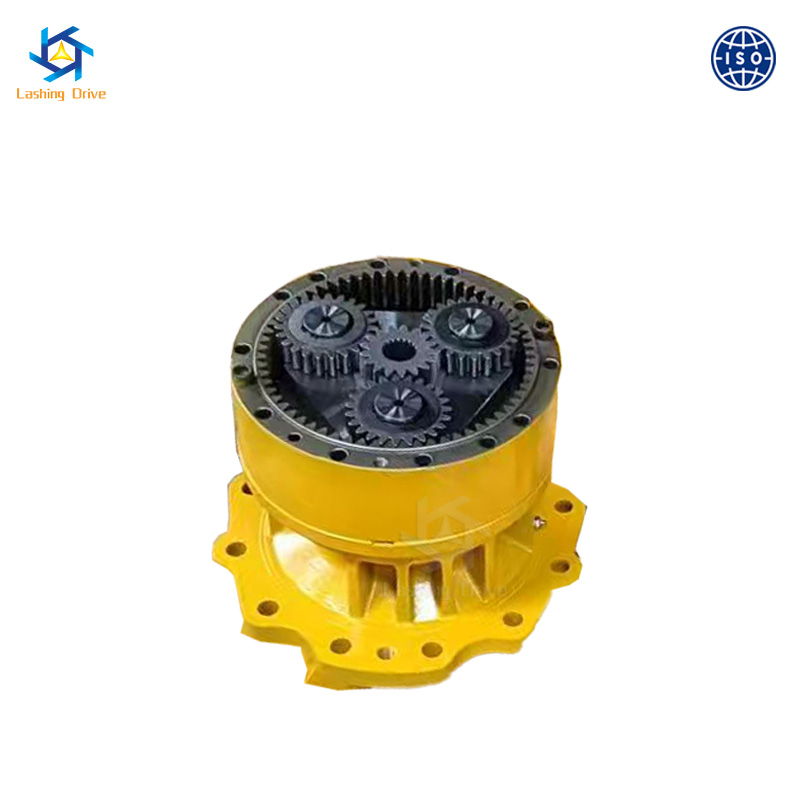
Heavy-duty sectors such as commercial construction, deep-shaft mining, and marine dredging rely on robust equipment that faces unpredictable shock loads. These mobile applications demand complex fluid-power integrations and heavy-duty environmental seals. Standard private label gearboxes simply cannot handle these extreme operational forces and often suffer catastrophic shaft or seal failures in harsh environments. For these massive projects, you must collaborate with a factory to engineer a custom hydraulic planetary reducer. Built to accommodate direct integration with hydraulic motors and withstand massive radial loads, this tailored approach is the only way to ensure excavators and cranes operate safely in the field.
Procurement teams and lead engineers should follow a structured, actionable evaluation process when vetting potential suppliers. Skipping these critical technical steps can lead to costly supply failures and compromised machinery.
Smart procurement looks far beyond the initial per-unit price of the gearboxes. You must factor in international shipping costs, import tariffs, custom tooling expenses, and the value of long-term warranty support. A seemingly cheaper private label unit might cost significantly more over a five-year period if maintenance, downtime, and replacement costs begin to compound due to premature bearing failures.
Ensure the manufacturer operates state-of-the-art testing facilities. They must routinely perform dynamic load testing, thermal analysis, and noise emission testing in an anechoic chamber. Coordinate Measuring Machine inspection is especially crucial for verifying gear tooth profiles. Always ask to see their updated ISO 9001 certificates and third-party audit reports. Transparency in quality control is a strong indicator of a reliable partner.
Testing a physical unit in real-world conditions is paramount. You should always execute field tests before committing to a massive bulk order. Prototypes reveal potential flaws in the manufacturing process early on. This allows engineers to verify actual performance against theoretical metrics like operating temperature and vibration levels. Never skip the prototyping phase, especially for custom OEM projects.
Growing businesses rarely stick to one static strategy. They often evolve their sourcing models as they expand their market share. A company might intelligently start by buying private label reducers to test a new market with minimal financial risk. This allows them to validate customer demand and build capital without massive upfront investments in custom casing molds.
Once consistent, high sales volumes are firmly established and product-market fit is proven, the company can safely transition to an OEM model. This strategic shift justifies the investment in custom tooling. It helps the business increase its long-term profit margins and ultimately builds a highly defensible, unique brand identity in the competitive industrial sector.
An Original Equipment Manufacturer builds products entirely to your exact design specifications, meaning you retain all intellectual property rights. An Original Design Manufacturer designs and engineers the product themselves. They own the intellectual property and allow you, along with other brands, to purchase and private-label the units for resale.
Generally, no. Hydraulic planetary reducers require highly specific fluid dynamic engineering and heavy-duty integrations tailored to the exact machinery they will drive. Off-the-shelf private label solutions usually fail under these extreme operational pressures. This makes an OEM approach absolutely necessary for heavy-duty fluid power applications.
Minimum order quantities vary widely depending on the specific manufacturer's capacity and the complexity of the gearbox. However, custom production runs typically require higher minimums to offset the factory's costs for custom tooling, molds, and research development. Buyers should generally expect minimums ranging from 500 to over 1,000 units for fully custom projects.
Volume plays a critical role in manufacturing economics. When you order higher quantities, the initial fixed costs for engineering hours, CNC programming, and casting molds are distributed across more units. Consequently, a higher minimum order quantity significantly drives down the per-unit price, making large-scale OEM runs highly cost-effective in the long term.
Off-the-shelf private label gearboxes can often be shipped within 2 to 4 weeks, as the components are already machined and simply await final assembly or branding. In contrast, a custom OEM design typically requires 12 to 16 weeks for the initial batch. This longer timeline accounts for 3D modeling, prototype machining, rigorous dynamic load testing, and final design revisions before mass production begins.
Choosing between OEM and private label requires a careful, calculated balance of your budget, timeline, and specific technical needs. Regardless of the path you choose, partnering with a vetted, technologically advanced manufacturer is critical to your mechanical success. Evaluate your operational demands thoroughly, and ensure your chosen supplier can scale alongside your business. To explore a comprehensive catalog of high-performance transmission solutions or to discuss bespoke engineering capabilities, visit CNLashing to find the exact brand and product match for your next industrial project.