Views: 0 Author: Site Editor Publish Time: 2026-09-15 Origin: Site
Equipment downtime forces a critical choice on the factory floor. You must decide whether to rebuild the failed gearbox or source a new unit. The clock ticks loudly while production lines sit idle. Every lost hour translates directly to shrinking profit margins. While repairing an existing unit seems cheaper on paper at first glance, the reality is far more complex. Hidden labor hours quickly accumulate during teardowns. Sourcing delays for specialized replacement parts stall your progress. Moreover, the lingering risk of secondary internal failures often skews the true return on investment.
We designed this guide to provide maintenance managers and procurement teams with a concrete, evidence-based framework. You will learn precisely when a mechanical rebuild remains viable. More importantly, you will discover when upgrading to a modern replacement represents the safer, more economical decision for your facility. By following these steps, you eliminate guesswork and protect your operational budget.
The 50% Rule: If repair costs (labor + parts) exceed 50% of the price of a new unit, replacement is historically the better long-term investment.
Downtime vs. Lead Time: The decision often hinges on which path gets production back online faster—waiting on custom bronze gears or installing an in-stock standard replacement.
Upgrade Opportunities: Replacing a failed unit provides a chance to standardize inventory or integrate modern safety features (e.g., self-locking mechanisms) without a custom engineering premium.
Minor consumable failures differ vastly from catastrophic damage. You can easily fix leaking oil seals. Replacing worn input bearings requires minimal effort. These minor issues rarely justify discarding the entire unit. However, severe internal damage demands much closer scrutiny. Stripped bronze worm wheels signal major trouble inside the casing. Cracked cast-iron housings and bent input shafts indicate catastrophic failure.
A rebuild makes financial sense only under very specific conditions. You should consider repairs for highly customized gearboxes. Extremely large footprint models also warrant rebuilding efforts. In these specific cases, finding a direct drop-in replacement proves difficult. Extensive mounting modifications consume too much engineering time. You must protect your existing infrastructure when custom engineering becomes too costly.
You must accurately calculate the true cost of a rebuild. Many maintenance teams severely underestimate this figure. Factor in the skilled tear-down labor required to inspect the damage. Add the expense of sourcing rare or discontinued parts. Do not forget potential machining costs for worn housing bores. Finally, account for reassembly time and rigorous bench testing. We must look at the complete financial picture.
Let us review common failure points and their typical repair viability:
Failed Oil Seals: Highly viable for repair. Low cost and fast turnaround.
Worn Bearings: Viable if caught early before shaft scoring occurs.
Stripped Gear Teeth: Rarely viable. Indicates severe overload and likely shaft distortion.
Cracked Housing: Never viable. Structural integrity is permanently compromised.
Repairing an older gearbox introduces significant hidden liabilities. We call this the "patch-fix" trap. Maintenance teams often replace a visibly worn bronze gear. However, they leave fatigued steel shafts in place. They might also ignore stressed mechanical housings. This approach practically guarantees a secondary failure down the road. Micro-fractures within the steel components often go unnoticed during basic visual inspections. When you place the patched unit back into service, these micro-fractures propagate rapidly.
Another major risk involves warranty coverage. Rebuilt older units rarely carry comprehensive protection. Factory-new models offer extended peace of mind. A localized repair shop might only guarantee their specific labor. They will not cover the entire unit if a different component fails next month. This exposes your maintenance budget to continuous, unpredictable hits.
You also face a massive downtime multiplier. Supply chain delays for legacy components cripple production lines. Finding a 20-year-old proprietary gear often takes several weeks. Machine shops charge exorbitant expedite fees to cut custom bronze wheels. Conversely, standard dimensions remain readily available on supplier shelves. You must weigh these hidden supply chain risks before authorizing a rebuild. The cost of halted production usually eclipses the price of a new gearbox within hours.
The industrial manufacturing landscape has shifted dramatically over the past decade. Modern production techniques have successfully driven down standard gearbox costs. Today, purchasing a new cost-effective worm reducer makes tremendous financial sense. The baseline purchase price frequently falls below your internal maintenance labor expenses. Your mechanics cost money for every hour they spend tinkering at the workbench.
Industry-standard designs provide another massive advantage for modern facilities. Center distances and shaft dimensions now follow universal standardizations. A new unit often bolts directly into the old machine footprint. You rarely need custom adapter plates anymore. This drop-in equivalence saves countless hours of frustrating installation time. Maintenance teams can swap standard units in mere minutes.
Furthermore, a fresh replacement resets your equipment's lifecycle clock completely to zero. You immediately gain modern lubrication capabilities. New units feature advanced oil sealing technologies that outlast older designs. High-grade synthetic oils in modern units extend maintenance intervals significantly. You also receive full manufacturer warranties spanning multiple years. This ensures long-term operational reliability for your facility. You eliminate the lingering anxiety associated with aging, patched-together equipment.
Buyers often fall into the exact-match legacy trap. They assume they must order the precise brand and model that just failed. You should challenge this outdated assumption immediately. A mechanical failure event creates a perfect upgrade opportunity. You can standardize your inventory and improve overall performance.
Consider integrating modern safety enhancements into your process workflow. Shifting to a self-locking worm gearbox offers immense value for vertical applications. This design physically prevents hazardous back-driving during operation. It secures hoisting mechanisms and inclined conveyors natively. You achieve this vital safety factor without requiring complex external braking systems.
You can also vastly improve operating efficiency and physical form factor. Transition away from obsolete, heavy cast-iron behemoths where appropriate. Upgrading to a modern universal rv worm reducer brings immediate physical benefits. You get a much lighter weight footprint. Aluminum housings provide far better thermal heat dissipation. They run cooler and prolong internal oil life. They also allow for highly flexible, multi-directional mounting orientations.
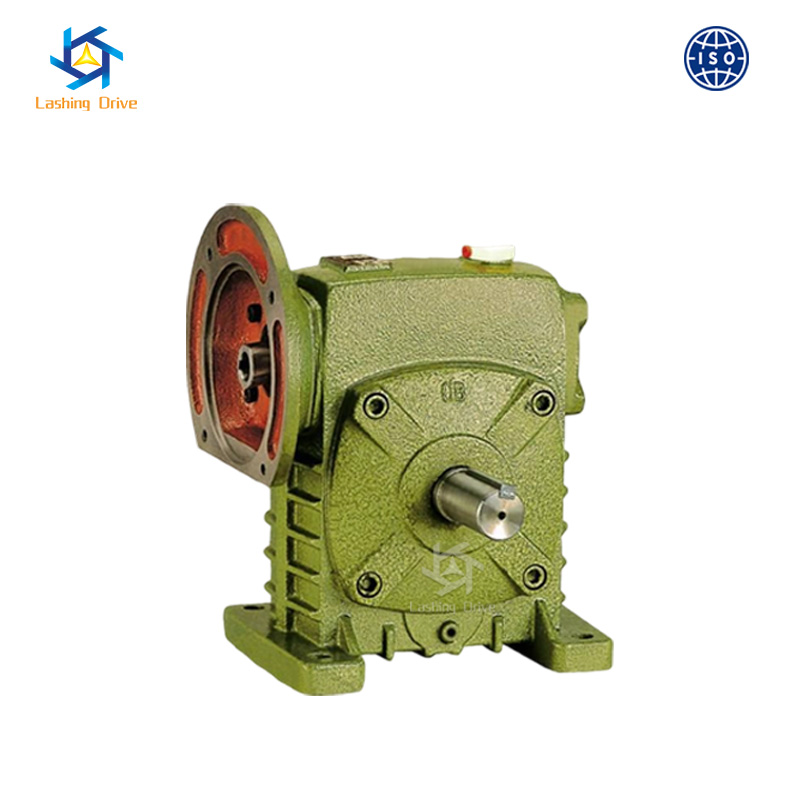
Sometimes, heavy shock loads dictate traditional rugged designs. In these heavy-duty cases, you need a direct wp worm reducer replacement. This traditional transition ensures seamless shaft height matching. Your existing factory bolt patterns align perfectly with the new unit. Meanwhile, you still benefit from significantly upgraded internal metallurgy and better factory machining tolerances.
Making the right choice requires an objective, data-driven approach. We developed this step-by-step framework to eliminate emotional decision-making when equipment fails.
Calculate Total Cost of Repair (TCR): Use a strict, inclusive formula. Combine your internal hourly labor rate with the external parts quote. Add your projected facility downtime cost. Many managers forget to include the overhead cost of lost production.
Compare to Total Cost of Replacement: Evaluate the new unit price comprehensively. Add any expedited shipping fees to the baseline cost. Include the estimated installation time required by your mechanics. Modern drop-in units usually require minimal installation hours.
Perform the Obsolescence Check: Ask yourself critical lifecycle questions. Is the current unit older than seven to ten years? Are original OEM parts still readily available? If a unit faces obsolescence, repairing it wastes capital.
Make the Final Call: Apply strict shortlisting logic to finalize your choice. If the TCR exceeds 50% of the new unit cost, buy new. If a repair takes three days longer than new unit delivery, buy new.
Evaluation Criteria | Favors Repair | Favors Replacement |
|---|---|---|
Part Availability | Readily available | Obsolete or >3 weeks lead time |
Damage Extent | Minor seals/bearings only | Cracked housing, stripped gears |
Unit Customization | Highly custom dimensions | Industry standard footprint |
Age of Equipment | Less than 3 years old | Older than 7-10 years |
Expense Category | Repair Scenario | Replacement Scenario |
|---|---|---|
Hardware & Parts | High (custom machining) | Fixed (standard unit price) |
Labor Hours | High (teardown & assembly) | Low (direct drop-in) |
Downtime Impact | High (waiting on parts) | Low (off-the-shelf delivery) |
Warranty Coverage | None or limited | Full manufacturer warranty |
We must summarize the optimal path forward for facility managers. Rebuilding remains cost-effective only for minor wear or highly specialized legacy units. For most standard industrial applications, installing modern replacements offers superior long-term value. You gain immense peace of mind. Your equipment lifecycle resets completely. Take decisive action today. Encourage your maintenance team to stop waiting endlessly on complex parts quotes. Immediately check standard replacement sizing charts. You can easily contact technical sales for a direct cross-reference quote. Getting your production line running requires swift, informed choices.
A: Cross-referencing an old unit takes only a few minutes. You simply need basic nameplate data. Locate the gear ratio and center distance. Identify the input and output frame sizes. A technical specialist can quickly match these details to a modern equivalent.
A: High-ratio worm gears are statically self-locking by design. However, they are not entirely fail-safe under dynamic conditions. Dynamic shock loads or vibrations can compromise the locking effect. Strict safety compliance for lifting applications often requires a secondary external brake.
A: Yes, you can easily switch brands. Modern manufacturers utilize industry-standard dimensional footprints. As long as the center distance, shaft diameters, and bolt patterns match, the new unit will act as a direct drop-in equivalent. You will not need custom adapters.
A: Aluminum reducers excel in standard duty applications. They provide superior heat dissipation and excellent corrosion resistance. However, cast-iron units offer greater structural rigidity. Cast iron remains the preferable material choice for environments involving extreme heavy-shock loads or severe mechanical stress.